The App Store Legal Fight Is Basically Over. The Counterparty Question Is Just Starting.
Another ruling just closed off Apple's path to fight the DMA. For studio monetization leaders, the more useful question isn't about app stores anymore.
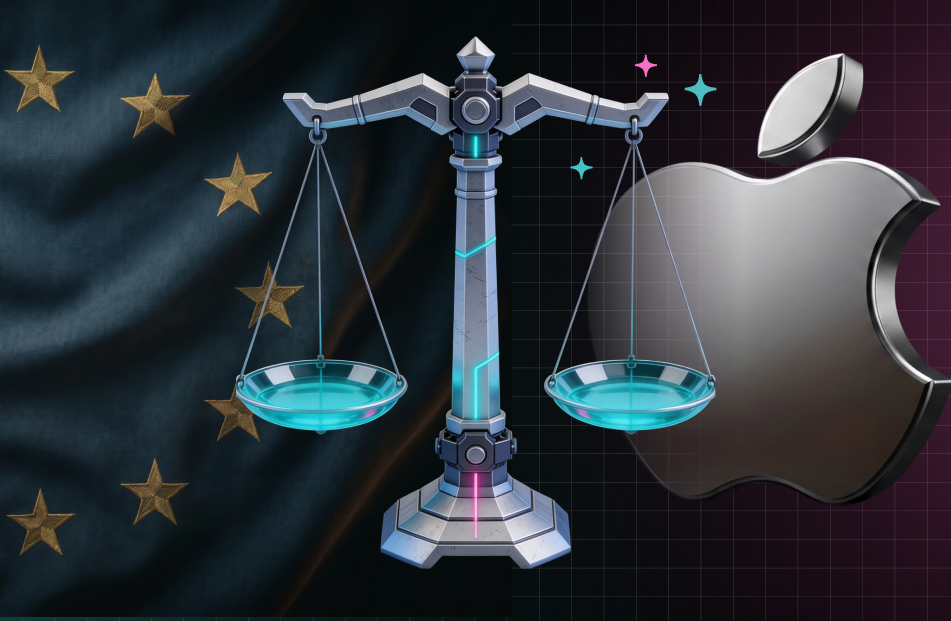
On July 8, 2026, Europe's General Court dismissed Apple's appeal against the European Commission's decision to designate iOS and the App Store as a core platform service under the Digital Markets Act.
Apple can still escalate to the EU's top court, but for now, the compliance obligation holds.
Most coverage will read this as an Apple story. It isn't, not really.
This is the fourth or fifth ruling in twelve months pointing the same direction:
The DMA designation.
The Ninth Circuit's modification of Apple's commission structure.
The Epic v. Google settlement, which cut Google's take and opened Android to competing app stores.
And now this.
The legal question behind direct-to-consumer commerce in games isn't opening and closing case by case. It's settling down, like a pool of water after a stormy season, to a new equilbrium. One that is pointing in the same direction.
What actually changed
Apple must keep complying with the DMA's app-distribution and payment rules while any further appeal plays out.
But this isn't a pause and Google faces its own binding specification decisions on search data-sharing and Android interoperability by July 27, 2026.
Two of the biggest gatekeepers in mobile, on parallel regulatory clocks, both trending toward more open distribution, not less.
For a studio finance team, the practical read is simple: the legal path to selling direct, outside the app store cut, keeps getting more momentum behind it with no signs of stopping.
The variable studios actually control
Here's what the App Store headlines don't cover: as the legal risk around going direct recedes, it stops being the thing that decides whether a studio's D2C strategy works.
What's left is a question studios have full control over, and one the regulatory news cycle can't answer for them: who's actually holding the infrastructure once you go direct.
Digital River is a warning case of what happens when the payment infrastructure is outsourced without the proper safeguards in place.
When Digital River filed for Chapter 7 in May 2025, it wasn't because direct-to-consumer commerce was the wrong strategy. Studios that had built webshops on Digital River's infrastructure didn't lose their D2C thesis, they lost their processor, mid-flight, with revenue exposure that had nothing to do with app-store policy.
That risk compounds independently of anything happening in Brussels or the Ninth Circuit.
Visa's tightening its own thresholds on the same timeline: its Acquirer Monitoring Program cut the acceptable chargeback ratio from 2.2% to 1.5% for North America and the EU, effective April 2026.
Gaming studios carry disproportionate friendly-fraud exposure relative to most merchant categories. That pressure shows up on a studio's books whether Apple wins or loses its next appeal.
Two separate questions
The regulatory story and the counterparty story are not the same risk, and they don't move together.
A studio can be fully cleared, legally, to sell direct in every major market and still be one processor failure away from a revenue stoppage that has nothing to do with platform policy.
This is where Tebex's own position acts as a strong bulwork against the risk described above. As a Merchant of Record, Tebex absorbs the chargeback and compliance exposure that a studio running its own D2C stack, or working with a thinly capitalized processor, would carry alone.
That doesn't make the regulatory questions less real but it does mean that the risk sits with Tebex and not the store owner.
The actual takeaway
The App Store legal fight has long ago stopped being the hard part. It's been clear for a while that the gaming market, and regulatory one, was moving in a single direction.
The harder question - the one that doesn't show up in a court ruling - is who a studio trusts to hold the infrastructure once that fight is done.
That's not a legal decision. It's a counterparty one. Which one is your finance team actually underwriting right now?